
Full-Stack by Design: Terawatt Software Director Nasrin Sadeghian on Building for the Real World
Ever wonder what actually goes into building charging infrastructure? There are so many teams at Terawatt working on such distinct but connected pieces of the infra puzzle. In the coming months, we'll be going under the hood, so to speak, and sitting down with people across the business to start to bring these puzzle pieces to life. We'll talk about the projects they're working on, the problems they're solving, and what keeps them energized — again, no pun intended.
First up is Nasrin Sadeghian, Terawatt's Software Director, who's been with us for four years working on everything from grid-aware reservation systems to AI-assisted code generation. Here's what she had to say.
What initially drew you to Terawatt, and what’s kept you here for four years?
I’ve built my career around applying AI and data strategies to energy. After finishing my PhD, I joined a pure software company and learned that when you’re building software to control an energy device like an EV charger, it’s ideal to own the full stack solution. Otherwise you’re building for someone else’s hardware, and you can’t always test.
When the opportunity to join Terawatt came along, the first thing I noticed was that the company owns this full stack: the hardware, land, electrical infrastructure, and software. I believe electrifying transport will be a huge contributor to addressing climate change, but the grid can be a bottleneck. Getting enough power to a site, and waiting through the utility upgrades and interconnection timelines, determines how fast fleets can electrify. So charge management ends up being the core product: when you can't get more power, you have to work with what you have. Terawatt’s ownership of the full stack means we can do that effectively.
Our chargers use Open Charge Point Protocol (OCPP) to communicate with the charge management software. But quite often, "protocol-compliant" and "interoperable" are not the same thing. Two chargers that both claim compliance will interpret optional features differently. We test all the software we develop with our hardware to identify capability gaps behind the compliance badge, so that we can confidently ship and operate our sites using our software platform.
As an engineer, it’s fulfilling to see what my team builds operating our sites better and more efficiently. We’re making meaningful, practical software for the real world.
Tell me about the reservation system your team built for Terawatt’s heavy duty customers. What makes it innovative?
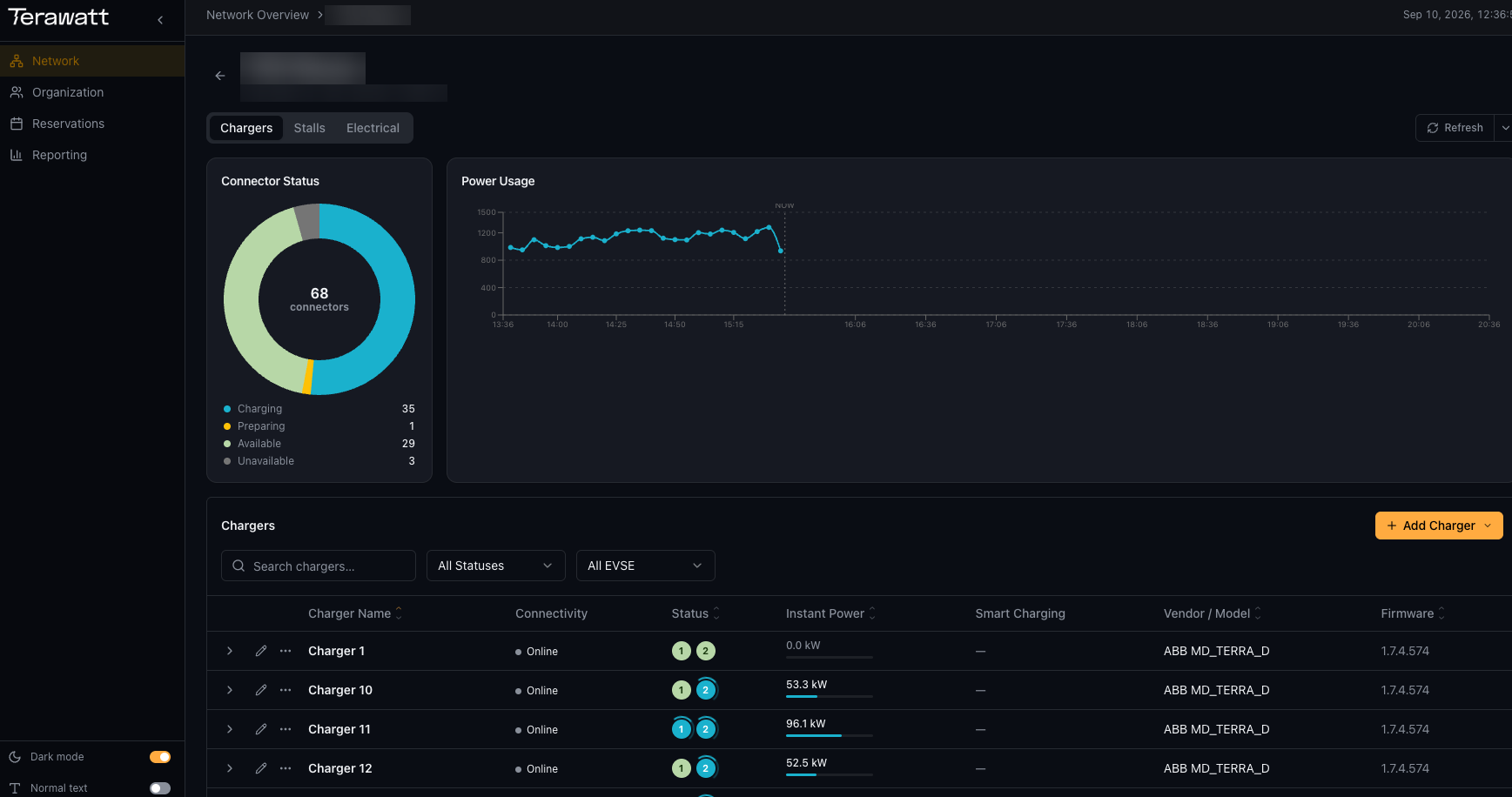
We have many different heavy duty customers sharing the same sites. They need to know that if they come to a site expecting an available charging stall and a certain charging speed, we will deliver.
Other reservation systems in the industry are based on fixed assumptions about grid capacity. Ours is adaptable to analyze available capacity based on utility schedules, taking into account that energy capacity is time of day- and season-dependent, so that we don’t overtax the grid.
Our system analyzes site availability and grid capacity, adjusts available reservations, and uses a license plate reader and reservation checks for customers to access the site. Once they plug in, the system recognizes if their vehicle is valid and that they have valid reservations and starts charging. This makes the site access and charging based on reservation seamless for drivers.
I always say that if something looks easy, that means a lot of effort went into it! We’re giving our customers a seamless experience – enter the site, charge, and leave. All the intricacies of connecting our access, reservation, display, and authorization systems are done underneath the hood. We can only do this because Terawatt owns the full stack of software and hardware, so we can offer holistic solutions.
What are the most interesting problems your team is working on right now in energy demand and load forecasting?
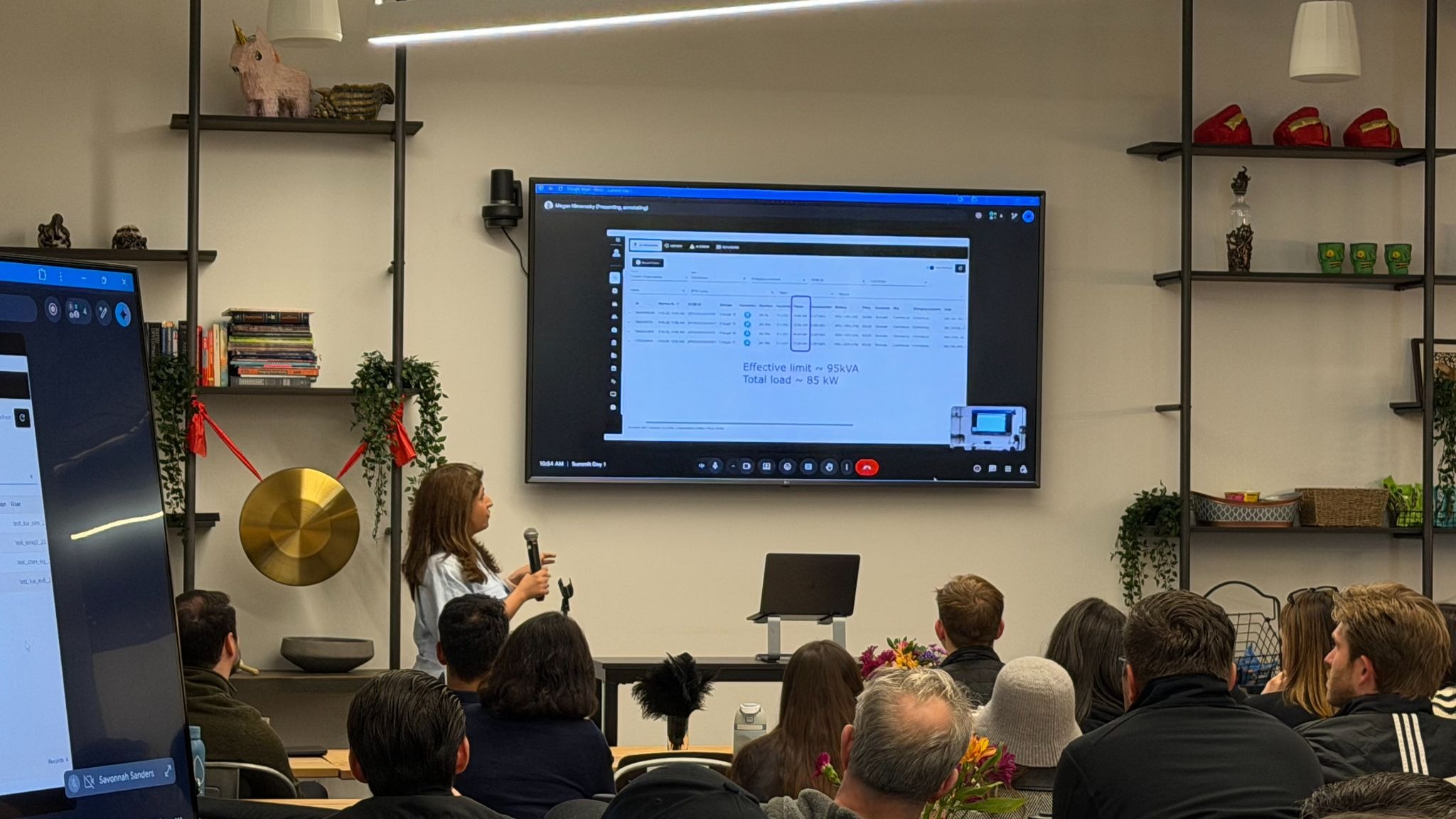
For our light duty customers, we need to coordinate charging rates to stay below the grid’s capacity. Power availability changes with the time of day and season. If we draw too much, we could “trip” the site, and drawing too little wastes power and charges vehicles slower than we promised.
We’ve built a load management algorithm to coordinate this. What makes it especially challenging is doing so with imperfect conditions, like missing data or lost network connections. We also run multiple charging vendors on one platform, and they don't all interpret OCPP the same way. Our service holds up under these constraints.
How has your team integrated AI into your work?
We’ve made AI-assisted code generation a big part of how we build.
Before writing a service, we define exactly how it should behave and log it in a standard format, OpenAPI, that both people and machines can read. Then, we build everything from that blueprint. A coding assistant can always execute against the blueprint instead of improvising. That's where these tools are at their best, and least likely to get things wrong.

What’s most unique about your job?
We’re positioned to create industry standards – we’re often the company doing things for the first time. I’ve been here for four years, and nothing about my job has been repetitive. What comes with that is the opportunity to constantly learn and adapt.
Because our software controls physical infrastructure, the results show up in the real world instead of just a dashboard. That raises the bar on everything we build. Engineers early in their careers have a big learning opportunity, and senior ones have a leading opportunity.
Terawatt's engineering team is hiring! Please click here for the latest openings, and don't hesitate to reach out with questions.